
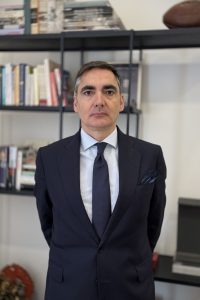
Nina Vélez-Troya entrevista a Enric Vilamajó, CEO y Director General de Winterman, sobre el legado de Eugenio Vélez Troya, la evolución de la investigación privada, la inteligencia aplicada, la ciberseguridad, la IA, las criptomonedas y el futuro institucional de la profesión.
Hay entrevistas que nacen del presente y otras que, además, abren una puerta hacia la memoria. La conversación con Enric Vilamajó, CEO y Director General de Winterman, pertenece a esa segunda categoría.
Su padre fue amigo de Eugenio Vélez Troya, pionero de la investigación privada en España y figura esencial para comprender el nacimiento, la consolidación y la evolución de una profesión que, durante décadas, ha trabajado entre la verdad, la confidencialidad, la prueba y la discreción.
Enric Vilamajó representa una generación que ha heredado esa cultura profesional, pero que la proyecta hacia los grandes desafíos del siglo XXI: la inteligencia corporativa, la investigación empresarial, la evidencia digital, el fraude interno, la ciberseguridad, la inteligencia artificial, la manipulación de la información y los nuevos riesgos tecnológicos.
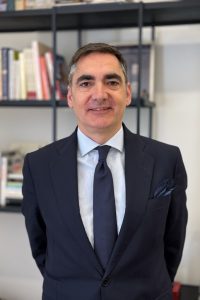
Directivo y especialista en seguridad, inteligencia y defensa corporativa, cuenta con más de dos décadas de experiencia en la prevención, detección y gestión de riesgos complejos que afectan a organizaciones públicas y privadas. Desde Winterman, firma especializada en investigación corporativa, inteligencia estratégica, seguridad y servicios forenses, dirige proyectos vinculados a fraude, corrupción, fugas de información, competencia desleal, amenazas internas, protección de activos críticos, compliance, ciberseguridad e informática forense.
En esta entrevista, Enric Vilamajó habla de la distancia entre el mito del detective y la realidad actual de la profesión; de la diferencia entre investigar hechos y generar inteligencia estratégica; de la fragilidad de la prueba digital; de los riesgos invisibles que nacen dentro de las propias organizaciones; y de la necesidad de que asociaciones, colegios y entidades profesionales trabajen como piezas complementarias de una misma arquitectura institucional.
Porque la investigación privada ya no pertenece solo al territorio de la sospecha. Hoy ocupa un lugar esencial en la gestión de riesgos, la defensa corporativa y la protección de la verdad verificable.
Enric, su padre fue amigo de Eugenio Vélez Troya, mi padre. ¿Qué recuerdos, referencias o valores le llegaron de aquella generación de detectives privados?
Mi padre nos hablaba con frecuencia de Eugenio Vélez Troya, a quien se refería siempre con enorme respeto y admiración. Para él fue mucho más que un compañero de profesión; fue una referencia humana y profesional.
De aquella generación recibimos enseñanzas que siguen plenamente vigentes: el rigor, la discreción, el compromiso con el cliente y la formación continua. Pero si tuviera que destacar una sola, sería la integridad.
Creo que buena parte del prestigio que hoy tiene la investigación privada se lo debemos a profesionales como Don Eugenio.
Usted dirige Winterman, una firma con una larga trayectoria en investigación, inteligencia, seguridad y forensics. ¿Cómo definiría hoy el papel real del detective privado en el mundo empresarial?
La figura del detective privado ha evolucionado de forma extraordinaria en las últimas décadas. Hoy las empresas operan en entornos complejos, donde conviven riesgos relacionados con el fraude, la competencia desleal, las fugas de información, los conflictos de interés o los incumplimientos normativos.
En ese contexto, nuestra función va mucho más allá de investigar hechos aislados. Ayudamos a las organizaciones a obtener información fiable, contrastada y jurídicamente válida para tomar decisiones con mayor seguridad.
El detective privado aporta algo especialmente valioso en un mundo saturado de información: la capacidad de diferenciar los hechos de las sospechas y las evidencias de las percepciones. Por eso, cada vez más somos vistos como un socio estratégico en la gestión de riesgos corporativos.
Durante muchos años, la figura del detective se ha asociado a una imagen casi novelesca. ¿Qué distancia existe entre ese imaginario y la realidad de una investigación corporativa actual?
Lo cierto es que poco o nada queda de aquellos personajes que inspiraron el cine de ficción.
Hoy en día, el detective privado es un profesional muy cualificado, con uno o varios grados universitarios, en formación y tecnificación constante y rodeado de tecnologías para realizar trabajos muy precisos en materia de investigación.
Nuestra labor se asemeja más a la de un abogado, auditor o consultor que a la de los protagonistas de gabardina y sombrero de ala ancha que protagonizaron las novelas negras de la primera mitad del siglo XX.
Winterman trabaja en ámbitos como fraude, corrupción, competencia desleal, fugas de información o espionaje industrial. ¿Cuáles son hoy los riesgos más invisibles para una empresa?
Creo que uno de los principales problemas es que seguimos tendiendo a sobrevalorar los riesgos externos y a infravalorar los internos.
La realidad demuestra que muchos de los incidentes más graves tienen su origen dentro de las organizaciones. Fraudes internos, fugas de información, conflictos de interés o incumplimientos normativos suelen generar impactos económicos importantes, pero también daños reputacionales muy difíciles de reparar.
Además, existe un cierto déficit de cultura preventiva. Muchas empresas reaccionan cuando el problema ya ha explotado, en lugar de identificar señales tempranas y gestionar el riesgo de forma proactiva.
Los riesgos más peligrosos suelen ser precisamente aquellos que permanecen ocultos durante mucho tiempo porque nadie ha puesto el foco en ellos.
En su CV aparece una idea muy interesante: la combinación entre investigación privada e inteligencia aplicada. ¿En qué momento una investigación deja de ser solo una búsqueda de hechos y se convierte en inteligencia estratégica?
La investigación privada y la inteligencia comparten una misma materia prima: la información. La diferencia está en el propósito.
Una investigación tradicional busca acreditar hechos: qué ocurrió, quién lo hizo, cuándo y cómo. La inteligencia estratégica, en cambio, va un paso más allá. No se limita a explicar el pasado, sino que intenta anticipar escenarios futuros y facilitar la toma de decisiones.
Por ejemplo, una investigación puede determinar que existe un fraude interno en una empresa. La inteligencia aplicada analiza además por qué se ha producido, qué vulnerabilidades del sistema lo han permitido, qué riesgos similares existen en otras áreas y qué puede ocurrir si no se adoptan medidas correctoras. Es decir, transforma datos y evidencias en conocimiento accionable.
En un entorno cada vez más complejo, marcado por la corrupción política y empresarial, la desinformación, los riesgos reputacionales y la incertidumbre, los clientes no solo necesitan respuestas; necesitan comprender las implicaciones de esas respuestas para proteger sus intereses y tomar mejores decisiones.
Esa es precisamente la aportación de la inteligencia aplicada.
Hablamos mucho de ciberseguridad, pero quizá menos de cultura de seguridad. ¿El principal riesgo de una organización sigue siendo humano?
Sin duda, el factor humano sigue estando en el centro de muchos incidentes, aunque también puede ser la principal línea de defensa.
Los ciberdelincuentes lo saben y cada vez recurren más a técnicas de ingeniería social porque resulta más sencillo engañar a una persona que vulnerar una infraestructura bien protegida.
Por eso me gusta diferenciar entre ciberseguridad y cultura de seguridad. La tecnología puede adquirirse, pero la cultura se construye.
Las organizaciones más seguras son aquellas donde las personas entienden qué deben proteger y por qué es importante hacerlo. Porque, al final, la pregunta no es si el principal riesgo es humano. La verdadera pregunta es si la organización ha conseguido convertir ese riesgo en una fortaleza.
En investigaciones internas, compliance o canales de denuncia, ¿cómo se equilibra la necesidad de descubrir la verdad con la protección de derechos, confidencialidad y reputación?
Ese equilibrio constituye uno de los mayores retos de cualquier investigación corporativa.
Descubrir la verdad es esencial, pero no puede hacerse sacrificando los derechos de las personas o las garantías que deben regir cualquier procedimiento.
Una buena investigación debe basarse en principios como la objetividad, la proporcionalidad, la confidencialidad y el respeto a la presunción de inocencia.
Además, la reputación no se protege ocultando problemas, sino gestionándolos correctamente. Las organizaciones más maduras entienden que investigar con rigor fortalece la confianza interna y externa.
Cuando una investigación se desarrolla con profesionalidad, permite esclarecer los hechos, gestionar adecuadamente los riesgos y reforzar la cultura ética de la empresa sin generar daños innecesarios.
La informática forense y la prueba digital son ya esenciales. ¿Está preparada la empresa española para conservar, proteger y presentar correctamente la evidencia digital?
Hemos progresado mucho, pero todavía existe una cierta distancia entre la importancia de la evidencia digital y la forma en que muchas organizaciones la gestionan.
Hoy prácticamente cualquier conflicto laboral, investigación interna, fraude o incidente de seguridad deja un rastro digital. Sin embargo, numerosas empresas siguen careciendo de protocolos adecuados para preservar esa información.
La evidencia digital es extremadamente frágil y puede perderse o contaminarse con facilidad. No basta con disponer de tecnología; es imprescindible contar con procedimientos de conservación, custodia y trazabilidad.
Desde mi experiencia, muchas investigaciones se ganan o se pierden en las primeras horas, cuando todavía es posible proteger adecuadamente la información relevante.
La inteligencia artificial, las criptomonedas, la manipulación digital, la suplantación de identidad y los nuevos entornos tecnológicos están cambiando tanto la forma de delinquir como la forma de investigar. Desde su experiencia en inteligencia, investigación corporativa, forensics y defensa empresarial, ¿cuáles cree que son los riesgos emergentes que las empresas y los detectives privados deberían tomarse más en serio en los próximos años?
Estamos asistiendo a una auténtica transformación del entorno de riesgos.
La inteligencia artificial está facilitando la creación de contenidos falsos extremadamente convincentes, lo que plantea desafíos inéditos para la autenticación de evidencias y la confianza en la información.
Paralelamente, observamos una creciente automatización del fraude mediante campañas de ingeniería social cada vez más sofisticadas.
También están desapareciendo las fronteras entre los riesgos digitales y los corporativos tradicionales. Un incidente tecnológico puede convertirse rápidamente en una crisis reputacional, financiera u operativa.
Todo ello obligará a empresas e investigadores a desarrollar capacidades más avanzadas en inteligencia, análisis de datos, ciberseguridad y verificación de información para poder anticiparse a amenazas cada vez más complejas.
Durante años nos preocupó que nos robaran los datos. En los próximos años nos preocupará también que nos hagan dudar de la realidad.

Usted trabaja desde Barcelona y también tiene presencia en Madrid, dos territorios muy relevantes para el presente y el futuro de la profesión. En un momento en el que conviven asociaciones profesionales, nuevas iniciativas territoriales, colegios autonómicos y el debate sobre una representación colegial más amplia a nivel estatal, ¿qué cree que necesita la profesión para avanzar unida, sin fragmentarse, y construir una arquitectura institucional fuerte, legítima y verdaderamente útil para todos los detectives privados?
Creo que la profesión atraviesa un momento especialmente importante.
Tenemos mayor especialización, más reconocimiento y más capacidad de influencia que nunca, pero también afrontamos retos significativos.
La clave para avanzar no está en la uniformidad, sino en la cooperación. Asociaciones profesionales, colegios territoriales y organizaciones empresariales desempeñan funciones diferentes y complementarias.
Desde mi posición como presidente de la patronal del sector, considero especialmente importante reforzar la representación empresarial, porque los detectives privados también somos empresas que generan empleo, innovación y actividad económica.
Lo verdaderamente importante es construir espacios de colaboración estables que permitan afrontar unidos desafíos como la modernización normativa, la adaptación tecnológica o la lucha contra el intrusismo.
¿Cree que asociaciones y colegios deben verse como estructuras enfrentadas o como piezas complementarias de una misma profesión?
Sin ninguna duda, como piezas complementarias de una misma profesión.
Los desafíos que afrontamos son demasiado relevantes como para desperdiciar energías en divisiones artificiales.
Cada entidad aporta valor desde una perspectiva distinta y todas pueden contribuir al fortalecimiento del sector. Lo importante no es la forma jurídica de una organización, sino su capacidad real para representar, defender y servir a los detectives privados.
Cuando las distintas instituciones trabajan de manera coordinada, la profesión gana credibilidad, influencia y capacidad de interlocución.
El futuro pasa por construir puentes, generar consensos y sumar esfuerzos. Una profesión fuerte necesita diversidad organizativa, pero también una visión compartida sobre los objetivos comunes.
Enric Vilamajó: Private Investigation, Corporate Intelligence and the New Map of Business Risks
Nina Vélez-Troya interviews Enric Vilamajó, CEO and Managing Director of Winterman, about the legacy of Eugenio Vélez Troya, the evolution of private investigation, applied intelligence, cybersecurity, AI, cryptocurrencies and the institutional future of the profession.
Some interviews are born from the present. Others also open a door to memory. The conversation with Enric Vilamajó, CEO and Managing Director of Winterman, belongs to the latter.
His father was a friend of Eugenio Vélez Troya, a pioneer of private investigation in Spain and an essential figure in understanding the birth, consolidation and evolution of a profession that, for decades, has operated between truth, confidentiality, evidence and discretion.
Enric Vilamajó represents a generation that has inherited that professional culture, while projecting it towards the major challenges of the 21st century: corporate intelligence, business investigations, digital evidence, internal fraud, cybersecurity, artificial intelligence, information manipulation and new technological risks.
An executive and specialist in security, intelligence and corporate defence, he has more than two decades of experience in the prevention, detection and management of complex risks affecting public and private organisations. From Winterman, a firm specialising in corporate investigation, strategic intelligence, security and forensic services, he leads projects related to fraud, corruption, information leaks, unfair competition, internal threats, protection of critical assets, compliance, cybersecurity and digital forensics.
In this interview, Enric Vilamajó speaks about the distance between the myth of the private detective and the current reality of the profession; the difference between investigating facts and generating strategic intelligence; the fragility of digital evidence; the invisible risks that arise within organisations themselves; and the need for associations, professional colleges and sector bodies to work as complementary pieces of the same institutional architecture.
Because private investigation no longer belongs only to the territory of suspicion. Today, it plays an essential role in risk management, corporate defence and the protection of verifiable truth.
Enric, your father was a friend of Eugenio Vélez Troya, my father. What memories, references or values did he pass on to you from that generation of private detectives?
My father often spoke to us about Eugenio Vélez Troya, whom he always mentioned with enormous respect and admiration. For him, he was much more than a professional colleague; he was a human and professional reference.
From that generation we inherited teachings that remain fully valid today: rigour, discretion, commitment to the client and continuous training. But if I had to highlight just one, it would be integrity.
I believe much of the prestige that private investigation enjoys today is owed to professionals such as Don Eugenio.
You lead Winterman, a firm with a long-standing track record in investigation, intelligence, security and forensics. How would you define the real role of the private detective in today’s business world?
The figure of the private detective has evolved extraordinarily in recent decades. Today, companies operate in complex environments where risks related to fraud, unfair competition, information leaks, conflicts of interest and regulatory breaches coexist.
In this context, our role goes far beyond investigating isolated facts. We help organisations obtain reliable, verified and legally valid information so they can make decisions with greater security.
The private detective brings something especially valuable in a world saturated with information: the ability to distinguish facts from suspicions and evidence from perceptions. That is why we are increasingly seen as a strategic partner in corporate risk management.
For many years, the figure of the detective has been associated with an almost novelistic image. How far is that imaginary world from the reality of a current corporate investigation?
The truth is that little or nothing remains of those characters who inspired fictional cinema.
Today, the private detective is a highly qualified professional, often with one or more university degrees, in constant training and technological development, surrounded by tools that enable very precise investigative work.
Our role is closer to that of a lawyer, auditor or consultant than to the trench-coat-and-wide-brimmed-hat figures who starred in the noir novels of the first half of the 20th century.
Winterman works in areas such as fraud, corruption, unfair competition, information leaks and industrial espionage. What are the most invisible risks for a company today?
I believe one of the main problems is that we still tend to overestimate external risks and underestimate internal ones.
Reality shows that many of the most serious incidents originate inside organisations. Internal fraud, information leaks, conflicts of interest and regulatory breaches often generate significant economic impacts, but also reputational damage that is very difficult to repair.
There is also a certain lack of preventive culture. Many companies react once the problem has already exploded, instead of identifying early warning signs and managing risk proactively.
The most dangerous risks are often precisely those that remain hidden for a long time because no one has focused on them.
Your CV includes a very interesting idea: the combination of private investigation and applied intelligence. At what point does an investigation stop being merely a search for facts and become strategic intelligence?
Private investigation and intelligence share the same raw material: information. The difference lies in the purpose.
A traditional investigation seeks to establish facts: what happened, who did it, when and how. Strategic intelligence, however, goes one step further. It does not merely explain the past; it attempts to anticipate future scenarios and support decision-making.
For example, an investigation may determine that there is internal fraud within a company. Applied intelligence also analyses why it occurred, what vulnerabilities in the system allowed it, what similar risks exist in other areas and what may happen if corrective measures are not adopted. In other words, it transforms data and evidence into actionable knowledge.
In an increasingly complex environment, marked by political and corporate corruption, disinformation, reputational risks and uncertainty, clients do not only need answers; they need to understand the implications of those answers in order to protect their interests and make better decisions.
That is precisely the contribution of applied intelligence.
We talk a lot about cybersecurity, but perhaps less about security culture. Is the main risk for an organisation still human?
Undoubtedly, the human factor remains at the centre of many incidents, although it can also be the main line of defence.
Cybercriminals know this and increasingly resort to social engineering techniques because it is easier to deceive a person than to breach a well-protected infrastructure.
That is why I like to distinguish between cybersecurity and security culture. Technology can be purchased, but culture must be built.
The safest organisations are those where people understand what they must protect and why it is important to do so. Because, ultimately, the question is not whether the main risk is human. The real question is whether the organisation has managed to turn that risk into a strength.
In internal investigations, compliance or whistleblowing channels, how do you balance the need to uncover the truth with the protection of rights, confidentiality and reputation?
That balance is one of the greatest challenges of any corporate investigation.
Discovering the truth is essential, but it cannot be done by sacrificing people’s rights or the guarantees that must govern any procedure.
A good investigation must be based on principles such as objectivity, proportionality, confidentiality and respect for the presumption of innocence.
Furthermore, reputation is not protected by hiding problems, but by managing them correctly. The most mature organisations understand that investigating rigorously strengthens both internal and external trust.
When an investigation is carried out professionally, it makes it possible to clarify the facts, properly manage risks and reinforce the company’s ethical culture without causing unnecessary damage.
Digital forensics and digital evidence are now essential. Is the Spanish company prepared to preserve, protect and present digital evidence correctly?
We have made great progress, but there is still a certain distance between the importance of digital evidence and the way many organisations manage it.
Today, virtually any labour dispute, internal investigation, fraud or security incident leaves a digital trail. However, many companies still lack adequate protocols to preserve that information.
Digital evidence is extremely fragile and can easily be lost or contaminated. Having technology is not enough; it is essential to have preservation, custody and traceability procedures.
From my experience, many investigations are won or lost in the first few hours, when it is still possible to properly protect the relevant information.
Artificial intelligence, cryptocurrencies, digital manipulation, identity theft and new technological environments are changing both the way crimes are committed and the way investigations are conducted. From your experience in intelligence, corporate investigation, forensics and business defence, what emerging risks should companies and private detectives take more seriously in the coming years?
We are witnessing a genuine transformation of the risk environment.
Artificial intelligence is facilitating the creation of extremely convincing fake content, which poses unprecedented challenges for the authentication of evidence and trust in information.
At the same time, we are seeing a growing automation of fraud through increasingly sophisticated social engineering campaigns.
The boundaries between digital risks and traditional corporate risks are also disappearing. A technological incident can quickly become a reputational, financial or operational crisis.
All of this will require companies and investigators to develop more advanced capabilities in intelligence, data analysis, cybersecurity and information verification in order to anticipate increasingly complex threats.
For years, we worried about having our data stolen. In the coming years, we will also worry about being made to doubt reality itself.

You work from Barcelona and also have a presence in Madrid, two highly relevant territories for the present and future of the profession. At a time when professional associations, new territorial initiatives, regional professional colleges and the debate on broader national professional representation coexist, what does the profession need in order to move forward united, without fragmentation, and build a strong, legitimate and truly useful institutional architecture for all private detectives?
I believe the profession is going through a particularly important moment.
We have greater specialisation, more recognition and more capacity for influence than ever before, but we also face significant challenges.
The key to moving forward is not uniformity, but cooperation. Professional associations, territorial colleges and business organisations perform different and complementary functions.
From my position as president of the sector’s employers’ association, I consider it especially important to strengthen business representation, because private detectives are also companies that generate employment, innovation and economic activity.
What truly matters is to build stable spaces for collaboration that allow us to face together challenges such as regulatory modernisation, technological adaptation and the fight against professional intrusion.
Do you believe associations and professional colleges should be seen as opposing structures or as complementary pieces of the same profession?
Without any doubt, as complementary pieces of the same profession.
The challenges we face are too important to waste energy on artificial divisions.
Each entity brings value from a different perspective and all can contribute to strengthening the sector. What matters is not the legal form of an organisation, but its real ability to represent, defend and serve private detectives.
When the different institutions work in a coordinated way, the profession gains credibility, influence and capacity for dialogue.
The future lies in building bridges, generating consensus and joining forces. A strong profession needs organisational diversity, but also a shared vision of common goals.