
SALVADOR GAMERO: «HAY PROBLEMAS QUE NO EXIGEN MÁS INFORMACIÓN, SINO SABER A QUIÉN CONFIÁRSELOS»
Detective privado, emprendedor y profesor de Ciberinvestigación, Salvador Gamero aborda la investigación desde una óptica empresarial y de alta dirección: due diligence, inteligencia, superficie de exposición, riesgo reputacional, ciberinvestigación y defensa de los hechos ante los tribunales.
Un empresario rara vez entra en un despacho pidiendo OSINT, una pericial informática o una metodología concreta. Entra con un problema: una operación que necesita analizar, un socio que genera dudas, una fuga de información, una conducta desleal, una suplantación, una amenaza reputacional o un conflicto que puede terminar en los tribunales. Para Salvador Gamero, el trabajo comienza antes de abrir una herramienta: comienza entendiendo qué está en juego, qué necesita saber el cliente y qué disciplinas deben intervenir.
Detective privado, emprendedor y profesor de Ciberinvestigación, Salvador Gamero ha construido su actividad profesional en la intersección entre investigación privada, tecnología, ciberseguridad, informática forense, docencia y GRC —Governance, Risk & Compliance—. Esa visión multidisciplinar atraviesa también L-OSINT-IA: El arte de la ciberinvestigación y el OSINT en tiempos de IA, escrito junto a Manuela Díaz Noa, abogada especializada en protección de datos.
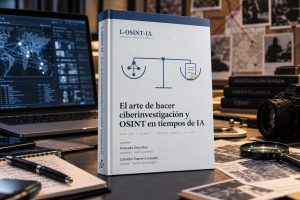
En esta conversación hablamos de empresa, alta dirección, due diligence, análisis previo, inteligencia, exposición digital, reputación, ciberinvestigación e inteligencia artificial. Y también de una idea que define su manera de entender la profesión: cuando una investigación llega a un procedimiento judicial, entregar el informe no siempre es el final. El trabajo culmina cuando el profesional ha ratificado su informe y ha respondido por él en sala.
Cuando un empresario entra en tu despacho, ¿qué es lo primero que intentas averiguar?
No empiezo preguntando qué herramienta vamos a utilizar ni a quién vamos a investigar. Empiezo preguntando qué ha ocurrido y, sobre todo, qué necesita resolver el cliente.
El empresario normalmente no habla en términos de OSINT, ciberinvestigación o informática forense. Dice: “quiero entrar en esta operación y necesito saber con quién estoy tratando”, “creo que alguien está sacando información”, “un socio puede estar perjudicándome”, “nos están suplantando” o “mi abogado necesita hechos que podamos acreditar”. Nuestro trabajo consiste en transformar ese problema en preguntas investigables.
Ahí aparece el análisis previo. Antes de consumir recursos hay que separar hechos, sospechas e hipótesis, conocer qué información existe, valorar qué podemos obtener lícitamente y decidir qué profesionales necesitamos. Una investigación bien dirigida empieza mucho antes de la primera búsqueda.
Has insistido mucho en el análisis previo. ¿Qué diferencia puede marcar en términos empresariales?
Puede cambiar completamente el resultado, el coste y el ROI. A veces un cliente llega con veinte preguntas y, después de analizar el asunto, descubres que solo dos son verdaderamente determinantes. Si respondemos esas dos, quizá las otras dieciocho ya no importan.
Para mí, hablar de ROI en investigación no significa prometer que cada euro invertido produzca un retorno económico directo. Significa preguntarnos qué decisión permite tomar la información obtenida, qué pérdida puede evitar, qué riesgo permite dimensionar y si el coste de seguir investigando continúa siendo proporcional al valor esperado.
Primero definimos el problema, después los objetivos y finalmente elegimos metodología y recursos. Ciberinvestigar no consiste en acumular datos: consiste en formular preguntas adecuadas y obtener, contrastar y documentar información digital hasta convertirla en hechos útiles y, cuando proceda, acreditables.
¿Dónde encajan la inteligencia y la due diligence cuando asesoras a empresas y directivos?
Encajan cuando el cliente necesita comprender mejor un escenario antes de comprometer capital, reputación o confianza. Una due diligence no debería limitarse siempre a comprobar documentos aportados por las partes. Dependiendo del encargo, puede resultar útil ampliar la mirada: quiénes son realmente los actores, qué antecedentes públicos existen, qué relaciones aparecen, qué exposición reputacional encontramos y si la realidad observable encaja con el relato que se nos presenta.
Ahí la inteligencia aporta contexto para decidir. Combinar la capacidad de análisis de la inteligencia empresarial con la de obtención de la investigación privada, ofrece un resultado muy interesante.
Para un empresario, un family office o un órgano de dirección, una buena información antes de firmar puede tener un ROI enorme si evita una mala operación. A veces el mejor resultado es precisamente aquello que decides no hacer.
Directivos, grandes empresarios y personas de alta exposición pueden convertirse en objetivos. ¿Tiene sentido investigar la propia huella digital antes de que lo haga un tercero?
Muchísimo. Hay perfiles cuya posición profesional, patrimonio, notoriedad o responsabilidad hace razonable trabajar de forma preventiva. Yo empezaría planteándoles una pregunta muy sencilla: ¿qué podría averiguar sobre usted una persona que quisiera perjudicarle utilizando información accesible desde Internet?
Ahí hablamos de digital footprint y de superficie de exposición. No solamente de lo que alguien publica voluntariamente, sino de información dispersa que puede relacionarse: actividad societaria, perfiles antiguos, correos expuestos, filtraciones, dominios, fotografías, metadatos, relaciones familiares o profesionales, hábitos, ubicaciones y otros elementos que, individualmente, pueden parecer inocuos.
El objetivo es mirarnos desde fuera antes de que lo haga un tercero con malas intenciones. Identificar qué está expuesto, valorar qué riesgo representa y establecer un plan de reducción, monitorización o respuesta. Para determinados clientes, la privacidad deja de ser una cuestión meramente personal y pasa a formar parte de su risk management.
¿Dónde termina la reputación online y dónde empieza una investigación profesional?
Gestionar reputación online puede implicar comunicación, posicionamiento o contenidos. Mi pregunta es anterior y distinta: ¿qué está ocurriendo realmente, quién puede estar detrás y qué riesgo representa?
Una crítica legítima no es lo mismo que una suplantación, una campaña coordinada, perfiles falsos o una actuación deliberada destinada a perjudicar. Antes de reaccionar conviene hacer un assessment: separar ruido de amenaza, medir alcance, preservar lo relevante y decidir si estamos ante un problema de comunicación, seguridad, investigación o varios a la vez.
En clientes de alta exposición me interesa especialmente el enfoque preventivo. No esperar a que aparezca una crisis para descubrir nuestra superficie de exposición. Una revisión periódica del reputational risk y la exposición digital puede detectar vulnerabilidades informativas cuando todavía existe margen para actuar.
Hablas de una visión holística. ¿Cómo se aplica cuando el problema mezcla empresa, tecnología y posibles consecuencias jurídicas?
Los problemas reales rara vez pertenecen a una sola disciplina. Un fraude interno puede tener simultáneamente una dimensión humana, informática, laboral, mercantil, penal, reputacional y de protección de datos.
Mi experiencia en investigación privada, tecnología, ciberseguridad, informática forense y GRC me ha enseñado a mirar un mismo asunto desde perspectivas diferentes. Eso no significa pretender hacerlo todo personalmente. Significa comprender qué aporta cada disciplina y saber cuándo incorporarla.
El detective investiga hechos dentro de su marco legal, el abogado dirige la estrategia jurídica y el perito informático realiza el análisis técnico-pericial que corresponda. Coordinar no es mezclar competencias: es construir el equipo adecuado alrededor del problema.
Cuando una investigación empresarial puede terminar en los tribunales, ¿cómo cambia tu forma de trabajar?
Parto siempre de la posibilidad de que termine judicializada. Eso obliga a trabajar desde el primer minuto pensando no solamente en encontrar información, sino en poder explicar qué hice, cómo lo hice, por qué seguí una determinada línea y qué hechos sostienen mis conclusiones.
En ciberinvestigación es fácil quedar deslumbrado por el volumen de información o por herramientas sofisticadas. En sala eso es secundario. El trabajo tiene que ser comprensible, trazable, lícito y defendible.
El detective privado aporta además una figura profesional específicamente habilitada para realizar servicios de investigación privada dentro del marco legal español. No sustituye al abogado ni al perito: investiga, documenta y responde por su propio trabajo. El centro no son las herramientas. Son los hechos, la capacidad de acreditarlos y la capacidad de hacerse comprender.
Hay profesionales que consideran terminado su trabajo cuando entregan el informe. ¿Cuándo termina para ti un encargo que llega a juicio?
Cuando el asunto está judicializado, entregar el informe no significa necesariamente haber terminado. Desde que comienzo sé que puedo tener que comparecer ante un tribunal y responder por el trabajo realizado.
Si llega ese momento, considero que mi encargo termina cuando salgo del juzgado después de haber ratificado mi informe y contestado a las preguntas de las partes, de Su Señoría y, cuando corresponda, del Ministerio Fiscal.
Esa responsabilidad personal condiciona cómo investigo y cómo redacto. Si una conclusión no puedo sostenerla con hechos y explicar cómo he llegado hasta ella, probablemente no debería formularla de esa manera. Para mí, esa es una diferencia fundamental entre recopilar información y ejercer profesionalmente la investigación privada. A veces estamos en el lado de la acusación y a veces en el de la defensa.
Además de detective eres emprendedor. ¿Ha cambiado eso tu manera de tratar con otros empresarios y directivos?
Muchísimo. Cuando tienes trabajadores, proveedores, impuestos, obligaciones administrativas, protección de datos, inversiones, tesorería y clientes, entiendes mejor lo que significa que un problema llegue a la mesa de un empresario.
Para nosotros un asunto puede ser apasionante desde el punto de vista investigador. Para el cliente puede afectar al EBITDA, a una operación, al empleo, a la reputación, a la continuidad de una relación societaria o simplemente a su tranquilidad personal. Esa diferencia obliga a escuchar de otra manera.
El empresario no necesita que le demuestres constantemente cuánto sabes. Necesita que comprendas qué está en juego, que le expliques escenarios, costes y riesgos y que sepas cuándo una línea de trabajo deja de aportar valor. Una vez que estás en su equipo tienes que ayudar a ganar el partido, no dedicarte a explicar cómo juegas.
¿Crees que a los detectives privados les falta verse también como empresarios?
Es algo que ocurre en todos los sectores, te forman para ejercer, no para triunfar. Nos formamos para investigar, pero dirigir un despacho exige capacidades que no aparecen en una vigilancia ni en un informe: personas, Administración, compliance, clientes, cobros, proveedores, tecnología, marketing, reputación, formación, tesorería y rentabilidad. Tienes que priorizar que puedes delegar y que tienes que hacer tú. El trato al cliente final no me gusta delegarlo, tengo que notar esa confianza que tiene que ser mutua.
Ser un gran investigador no garantiza saber construir una empresa sostenible. Y un despacho sostenible puede invertir mejor en talento, tecnología, especialistas, seguridad y procedimientos. Al final, profesionalizar el management también mejora la calidad de la investigación.
Como profesor de Ciberinvestigación, ¿qué te ha aportado convertir experiencia profesional en conocimiento que otros puedan aprender?
Enseñar te obliga a justificar lo que haces. En la práctica profesional desarrollamos intuiciones y automatismos, pero un alumno necesita comprender por qué una metodología funciona, cuándo debe aplicarla y cuáles son sus límites.
Intento que comprendan que ciberinvestigación, OSINT, inteligencia, informática forense y ciberseguridad se relacionan, pero no son sinónimos. Saber distinguirlas permite combinarlas correctamente.
Y la docencia me ha enseñado algo muy empresarial: el conocimiento que no puedes sistematizar es difícil de transferir. Convertir experiencia en método permite formar equipos, establecer procedimientos, mantener estándares de calidad y hacer que una organización aprenda. Más de 36 años de experiencia docente y muchos de ponente en congresos me aportan aplomo a la hora de ratificar mis informes en sala.
Ese proceso conecta con tu libro L-OSINT-IA. ¿Qué intentas aportar con él?
L-OSINT-IA nace de esa necesidad de método. No quería escribir una colección de herramientas porque las herramientas cambian continuamente. Me interesa más explicar una forma de abordar la ciberinvestigación y el OSINT cuando la inteligencia artificial está multiplicando nuestras capacidades.
La IA permite procesar, relacionar, resumir y explorar información a una velocidad extraordinaria, pero introduce riesgos: aceptar resultados falsos, perder trazabilidad o confundir una respuesta plausible con un hecho acreditado.
Por eso metodología, legalidad y criterio humano ganan importancia. Y por eso la coautoría de Manuela Díaz Noa aporta una mirada jurídica. El cumplimiento normativo no puede ser una comprobación al final; debe formar parte del diseño desde el principio.
¿EustaquIA forma parte de esa misma visión empresarial de innovación?
Sí. Para mí es I+D aplicado a nuestro sector. Me interesa qué ocurre cuando dejamos de utilizar la inteligencia artificial exclusivamente como herramienta generalista y empezamos a especializarla en un contexto profesional concreto: investigación privada, ciberinvestigación y legislación aplicable.
No la concibo como sustituta del detective. Una inteligencia artificial no asume nuestro encargo profesional, nuestra responsabilidad ni se sienta en un juzgado a ratificar un informe.
Me interesa la combinación: utilizar tecnología para aumentar capacidades y productividad sin diluir la responsabilidad del profesional que toma decisiones y responde por el resultado. No me entra en la cabeza ningún profesional que no esté adaptando su oficio a las posibilidades de la IA.

Detectivia, Cibergia, docencia, L-OSINT-IA y EustaquIA parecen proyectos diferentes. ¿Qué hilo conductor hay detrás?
Tengo una gran curiosidad por entender el presente, aunque muchas veces noto que algunos, al presente, le llaman futuro. El hilo conductor siempre ha sido esa curiosidad unida a la imaginación.
Detectivia nace desde la investigación privada. Cibergia permite trabajar con capacidades tecnológicas y periciales especializadas. La docencia me obliga a ordenar y transmitir conocimiento. L-OSINT-IA convierte una parte de esa experiencia en metodología y EustaquIA explora la inteligencia artificial especializada.
No los veo como piezas independientes, sino como capacidades alrededor de problemas complejos. Para mí eso también es visión empresarial: observar cómo cambia el riesgo, anticipar necesidades y construir capacidades antes de que el mercado sepa exactamente cómo pedirlas.

¿Cómo diseñas un servicio de investigación de alto nivel para empresarios, directivos y perfiles de alta exposición?
Cada vez menos como un servicio reactivo que empieza cuando ya existe un problema y más como una relación de confianza basada en prevención, discreción y capacidad de respuesta.
Un private client con alta exposición puede necesitar revisar periódicamente su superficie digital, reputational risk, exposición familiar o societaria, amenazas, filtraciones y determinados cambios en su entorno. Una empresa puede necesitar due diligence, inteligencia, investigación de fraude o ciberinvestigación. Y si aparece un incidente, el valor está en que ya exista un equipo capaz de entender el contexto y activar los especialistas adecuados.
El verdadero lujo en este ámbito no es utilizar la herramienta más cara. Es tener acceso, cuando surge un problema sensible, a profesionales de confianza que entiendan el contexto, protejan la confidencialidad, sepan coordinar una respuesta y puedan acompañar el asunto hasta donde sea necesario, incluido un tribunal.
¿Cómo imaginas el despacho de investigación privada de los próximos diez años?
Seguirá necesitando calle. Las personas siguen viviendo y tomando decisiones en el mundo físico, pero prácticamente todas esas actividades tienen ya una dimensión digital.
El despacho del futuro tendrá que combinar buenos investigadores con cultura tecnológica, seguridad de la información, management, conocimiento de riesgos y una relación muy fluida con abogados, peritos y otros especialistas. También deberá comprender mucho mejor las necesidades de empresas, consejos de administración, family offices y private clients.
Y habrá algo todavía más importante: criterio. Las herramientas serán cada vez más accesibles y la IA hará en minutos tareas que antes exigían horas. La ventaja competitiva no estará en tener acceso a tecnología, sino en saber qué problema resolvemos, qué pregunta debemos formular, qué actuación es legalmente posible y qué resultado podemos defender.
No creo que el futuro consista en convertir al detective en informático. Consiste en convertirlo en un investigador mejor preparado para un mundo tecnológico y en un empresario capaz de construir alrededor de cada problema la solución adecuada.
La propuesta de Salvador Gamero amplía el perímetro tradicional del despacho de investigación: desde la due diligence y la inteligencia para la toma de decisiones hasta la protección preventiva de perfiles de alta exposición, la ciberinvestigación y la acreditación de hechos en sede judicial. El denominador común no es una herramienta, sino una forma de dirigir problemas complejos con discreción, metodología y capacidad para coordinar especialistas.
Salvador Gamero, Private Investigator, Entrepreneur, and Cyber Investigation Professor
SALVADOR GAMERO: “SOME PROBLEMS DON’T REQUIRE MORE INFORMATION, BUT KNOWING WHOM TO TRUST WITH THEM”
Private investigator, entrepreneur, and Cyber Investigation professor Salvador Gamero approaches investigations from a business and executive management perspective: due diligence, intelligence, digital exposure, reputational risk, cyber investigations, and defending factual findings in court.
Business owners rarely walk into an investigator’s office asking for OSINT, a digital forensic examination, or a specific methodology. They come with a problem: a transaction that needs to be assessed, a business partner who raises concerns, an information leak, disloyal conduct, identity impersonation, a reputational threat, or a dispute that could end up in court. For Salvador Gamero, the work begins before opening any investigative tool. It begins with understanding what is at stake, what the client needs to know, and which professional disciplines should be involved.
A private investigator, entrepreneur, and Cyber Investigation professor, Salvador Gamero has built his professional career at the intersection of private investigation, technology, cybersecurity, digital forensics, education, and GRC—Governance, Risk & Compliance. This multidisciplinary perspective also runs through L-OSINT-IA: The Art of Cyber Investigation and OSINT in the Age of AI, co-written with Manuela Díaz Noa, an attorney specializing in data protection.
In this interview, we discuss business, executive management, due diligence, preliminary analysis, intelligence, digital exposure, reputation, cyber investigations, and artificial intelligence. We also explore an idea that defines his understanding of the profession: when an investigation reaches the courtroom, submitting the report is not always the end of the assignment. The work is complete when the investigator has formally confirmed the report and answered for it in court.
When a business owner comes into your office, what is the first thing you try to establish?
I don’t start by asking which tool we’re going to use or whom we’re going to investigate. I start by asking what happened and, above all, what the client needs to resolve.
Business owners don’t usually speak in terms of OSINT, cyber investigations, or digital forensics. They say things like, “I want to enter into this deal, and I need to know whom I’m dealing with,” “I think someone is leaking information,” “A business partner may be harming my company,” “Someone is impersonating us,” or “My attorney needs facts we can substantiate.”
Our job is to turn that problem into questions that can be investigated.
That’s where preliminary analysis comes in. Before committing resources, we need to distinguish facts from suspicions and hypotheses, determine what information already exists, assess what we can legally obtain, and decide which professionals we need to involve.
A well-directed investigation begins long before the first search.
You’ve emphasized the importance of preliminary analysis. What difference can it make from a business perspective?
It can completely change the outcome, the cost, and the return on investment (ROI). Sometimes a client comes in with twenty questions, and after analyzing the situation, you discover that only two of them are truly decisive. If we answer those two, the other eighteen may no longer matter.
For me, talking about ROI in an investigation doesn’t mean promising that every dollar invested will generate a direct financial return. It means asking what decision the information will enable the client to make, what losses it might prevent, what risks it can help assess, and whether the cost of continuing the investigation remains proportional to its expected value.
First, we define the problem, then establish the objectives, and finally select the methodology and resources.
Cyber investigation isn’t about accumulating data. It’s about asking the right questions and obtaining, verifying, and documenting digital information until it becomes useful factual evidence that, when necessary, can be substantiated.
Where do intelligence and due diligence fit in when you advise companies and executives?
They come into play when clients need to understand a situation more thoroughly before committing capital, reputation, or trust.
Due diligence shouldn’t always be limited to reviewing documents provided by the parties involved. Depending on the assignment, it may be useful to broaden the scope: who the key players really are, what publicly available background information exists, which relationships emerge, what reputational exposure we identify, and whether the observable reality matches the narrative we’ve been presented with.
That’s where intelligence provides valuable context for decision-making.
Combining the analytical capabilities of business intelligence with the information-gathering capabilities of private investigation produces very interesting results.
For a business owner, family office, or board of directors, reliable information obtained before signing an agreement can generate an enormous ROI if it prevents a bad deal.
Sometimes the best outcome is precisely what you decide not to do.
Executives, major business owners, and high-profile individuals can become targets. Does it make sense to investigate their own digital footprints before someone else does?
Absolutely. There are individuals whose professional positions, wealth, public visibility, or responsibilities make preventive measures particularly advisable.
I would begin by asking them a very simple question: What could someone who wanted to harm you discover about you using information available on the Internet?
That’s where digital footprints and digital exposure come into play.
We’re not just talking about what someone voluntarily publishes, but also about scattered information that can be connected: corporate activities, old profiles, exposed email addresses, data breaches, domains, photographs, metadata, family or professional relationships, habits, locations, and other elements that may seem harmless individually.
The objective is to look at ourselves from an outsider’s perspective before someone with malicious intentions does.
We need to identify what’s exposed, assess the risks it represents, and establish a plan for reducing exposure, monitoring potential threats, or responding to incidents.
For certain clients, privacy is no longer merely a personal matter. It becomes part of their risk management strategy.
Where does online reputation management end and a professional investigation begin?
Online reputation management may involve communication, positioning, or content strategies.
My question comes earlier and is different: What’s actually happening, who might be behind it, and what risk does it represent?
Legitimate criticism isn’t the same as impersonation, a coordinated campaign, fake profiles, or deliberate actions intended to cause harm.
Before responding, it’s important to conduct an assessment: distinguish background noise from genuine threats, measure their reach, preserve relevant information, and determine whether we’re dealing with a communication issue, a security issue, an investigative matter, or several of these at once.
With high-profile clients, I’m particularly interested in prevention.
We shouldn’t wait for a crisis to discover our digital exposure.
Periodic reviews of reputational risk and digital exposure can identify information-related vulnerabilities while there’s still time to act.
You often speak about a holistic approach. How does that apply when a problem involves business, technology, and potential legal consequences?
Real-world problems rarely belong to a single discipline.
Internal fraud may simultaneously involve human behavior, information technology, employment law, commercial law, criminal law, reputation, and data protection.
My experience in private investigation, technology, cybersecurity, digital forensics, and GRC has taught me to examine the same issue from different perspectives.
That doesn’t mean trying to do everything personally. It means understanding what each discipline contributes and knowing when to bring it into the process.
The private investigator investigates facts within the applicable legal framework. The attorney directs the legal strategy, and the digital forensic expert performs the appropriate technical and forensic analysis.
Coordination doesn’t mean blurring professional responsibilities. It means building the right team around the problem.
When a corporate investigation might end up in court, how does that change the way you work?
I always proceed on the assumption that the matter could eventually become the subject of legal proceedings.
That means working from the very beginning with more than simply finding information in mind.
I need to be able to explain what I did, how I did it, why I pursued a particular line of investigation, and which facts support my conclusions.
In cyber investigations, it’s easy to become fascinated by the sheer volume of information or by sophisticated tools.
In the courtroom, those things are secondary.
The work must be understandable, traceable, lawful, and defensible.
A private investigator in Spain is also a specifically licensed professional authorized to conduct private investigation services within the country’s legal framework.
The investigator doesn’t replace the attorney or the forensic expert. The investigator investigates, documents, and takes responsibility for their own work.
The focus isn’t on the tools. It’s on the facts, the ability to substantiate them, and the ability to make them understandable.
Some professionals consider their job finished once they submit their report. When does an assignment that goes to trial end for you?
When a matter becomes part of legal proceedings, submitting the report doesn’t necessarily mean the assignment is complete.
From the moment I begin, I know I may have to appear before a court and answer questions about the work I’ve performed.
If that happens, I consider my assignment complete when I walk out of the courtroom after formally confirming my report and answering questions from the parties, the judge, and, when applicable, the public prosecutor.
That personal responsibility influences how I investigate and how I write.
If I can’t support a conclusion with facts and explain how I reached it, I probably shouldn’t present it in that form.
For me, that’s a fundamental distinction between gathering information and practicing private investigation professionally.
Sometimes we work on the side of the prosecution, and sometimes on the side of the defense.
In addition to being a private investigator, you’re also an entrepreneur. Has that changed the way you interact with other business owners and executives?
Very much so.
When you have employees, suppliers, taxes, administrative obligations, data protection responsibilities, investments, cash flow, and clients, you understand much better what it means when a problem lands on a business owner’s desk.
For us, a case may be fascinating from an investigative standpoint.
For the client, it may affect EBITDA, a business transaction, employment, reputation, the continuity of a corporate relationship, or simply their peace of mind.
That difference requires us to listen differently.
Business owners don’t need you to constantly demonstrate how much you know.
They need you to understand what’s at stake, explain scenarios, costs, and risks, and recognize when a particular investigative approach is no longer adding value.
Once you’re part of their team, your job is to help win the game, not spend your time explaining how you play.
Do you think private investigators need to see themselves more as business owners?
This happens in every industry: you’re trained to practice your profession, not necessarily to succeed in business.
We’re trained to investigate, but running an agency requires skills that don’t appear during surveillance or in an investigative report: people management, administration, compliance, customer relations, collections, suppliers, technology, marketing, reputation, professional development, cash flow, and profitability.
You need to prioritize what you can delegate and what you must handle yourself.
I don’t like delegating direct relationships with clients. I need to feel that trust, which has to be mutual.
Being an excellent investigator doesn’t guarantee that you know how to build a sustainable business.
And a sustainable agency can invest more effectively in talent, technology, specialists, security, and procedures.
Ultimately, professionalizing management also improves the quality of investigations.
As a Cyber Investigation professor, what has turning your professional experience into knowledge that others can learn taught you?
Teaching forces you to justify what you do.
In professional practice, we develop intuitions and automatic routines, but students need to understand why a methodology works, when it should be applied, and what its limitations are.
I try to help them understand that cyber investigation, OSINT, intelligence, digital forensics, and cybersecurity are related, but they aren’t synonymous.
Knowing how to distinguish between them allows us to combine them correctly.
Teaching has also taught me something very relevant to business: knowledge that cannot be systematized is difficult to transfer.
Turning experience into methodology makes it possible to train teams, establish procedures, maintain quality standards, and build organizations that learn.
More than 36 years of teaching experience, along with many years speaking at conferences, have given me confidence and composure when formally confirming my investigative reports in court.
That process connects with your book, L-OSINT-IA. What are you trying to contribute through it?
L-OSINT-IA grew out of that need for methodology.
I didn’t want to write a collection of tools because tools change constantly.
I’m more interested in explaining a way of approaching cyber investigations and OSINT at a time when artificial intelligence is dramatically expanding our capabilities.
AI allows us to process, connect, summarize, and explore information at extraordinary speed, but it also introduces risks: accepting false results, losing traceability, or confusing a plausible answer with an established fact.
That’s why methodology, legality, and human judgment are becoming increasingly important.
And that’s also why co-author Manuela Díaz Noa contributes an essential legal perspective.
Regulatory compliance cannot be something we check at the end. It must be part of the design from the beginning.
Is EustaquIA part of that same business-oriented vision of innovation?
Yes. For me, it’s research and development applied to our industry.
I’m interested in what happens when we stop using artificial intelligence exclusively as a general-purpose tool and begin specializing it within a specific professional context: private investigation, cyber investigation, and applicable legislation.
I don’t see it as a replacement for the private investigator.
Artificial intelligence doesn’t take responsibility for our professional assignments, assume our obligations, or sit in a courtroom to formally confirm an investigative report.
What interests me is the combination: using technology to increase capabilities and productivity without diminishing the responsibility of the professional who makes decisions and answers for the results.
I simply can’t imagine any professional who isn’t adapting their work to the possibilities offered by AI.
Detectivia, Cibergia, teaching, L-OSINT-IA, and EustaquIA seem like different projects. What’s the common thread connecting them?
I have a great deal of curiosity about understanding the present, although I often notice that some people call the present the future.
The common thread has always been that curiosity combined with imagination.
Detectivia emerged from private investigation.
Cibergia enables us to work with specialized technological and forensic capabilities.
Teaching forces me to organize and share knowledge.
L-OSINT-IA transforms part of that experience into methodology, while EustaquIA explores specialized artificial intelligence.
I don’t see them as independent pieces, but as complementary capabilities designed to address complex problems.
For me, that’s also part of having a business vision: observing how risks evolve, anticipating needs, and building capabilities before the market knows exactly how to ask for them.
How do you design a high-level investigation service for business owners, executives, and high-profile individuals?
Increasingly, I see it less as a reactive service that begins when a problem has already emerged and more as a relationship of trust built on prevention, discretion, and the ability to respond.
A high-profile private client may need periodic reviews of their digital exposure, reputational risk, family or corporate exposure, threats, data leaks, and certain changes in their environment.
A company may need due diligence, intelligence, fraud investigations, or cyber investigations.
And when an incident occurs, the real value lies in already having a team that understands the context and can bring in the appropriate specialists.
True luxury in this field isn’t about using the most expensive tool.
It’s about having access, when a sensitive problem arises, to trusted professionals who understand the context, protect confidentiality, know how to coordinate a response, and can support the matter for as long as necessary, including through court proceedings.
How do you envision the private investigation agency of the next ten years?
It will still need investigators working in the field.
People continue to live and make decisions in the physical world, but virtually all those activities now also have a digital dimension.
The agency of the future will need to combine excellent investigators with technological awareness, information security, management skills, risk expertise, and close collaboration with attorneys, forensic experts, and other specialists.
It will also need a much deeper understanding of the needs of businesses, boards of directors, family offices, and private clients.
And something will be even more important: judgment.
Tools will become increasingly accessible, and AI will perform in minutes tasks that once required hours.
The competitive advantage won’t come from having access to technology, but from knowing what problem we’re solving, what question we should ask, what actions are legally permissible, and what results we can defend.
I don’t believe the future is about turning private investigators into IT specialists.
It’s about making them better-prepared investigators for a technological world and business owners capable of building the right solution around each problem.
Salvador Gamero‘s approach broadens the traditional scope of the private investigation agency: from due diligence and intelligence supporting decision-making to preventive protection for high-profile individuals, cyber investigations, and the substantiation of facts in court.
The common denominator isn’t a particular tool, but a way of managing complex problems through discretion, methodology, and the ability to coordinate specialists.