
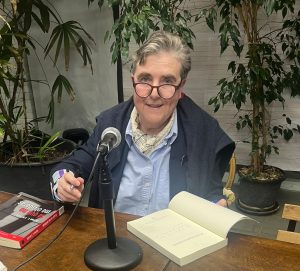
Áurea L. Lamela nació en Lugo y es psiquiatra de profesión además autora de varias novelas negras. Obtuvo la Licenciatura de Medicina en la Universidad De Santiago de Compostela y es Doctora en Medicina -programa de Psiquiatría- por la Universidad Complutense de Madrid con Cum Laude por unanimidad.
Es Especialista en Psiquiatría: Hospital Gregorio Marañón.
Es autora de numerosos artículos científicos de psiquiatría en Revistas y capítulos de algún libro especializado.
Publicación por la Universidad Complutense de su Tesis Doctoral: Pareja y trastorno Psíquico: Percepción Interpersonal y Expectativas (1991)
Ponente de congresos tanto nacionales como internacionales, sobre Esquizofrenia, Depresión, Psicopatología de la Pareja y Psicopatología del Trabajo.
Psiquiatra del Centro Rehabilitador y Residencial de enfermos mentales San Rafael de la Diputación de Lugo) desde 1991-2010
Psiquiatra del Servicio Galego de Saúde (SERGAS) desde 2011 a 2025, por jubilación.
Psiquiatra privado en la Clínica Concepción Arenal desde 1997 hasta la actualidad
Profesora Asociada de la Universidad de A Coruña durante 6 meses.
Ha publicado con Éride Ediciones las novelas negras: Nadie sabía, Buena Gente y Sin Criterio.
Con Esstudio Ediciones: Red de sombras (2018), Una venganza improvisada (2021), En la carretera vieja (2024). Sé que no me olvidarás (2025).

Se desarrollan en una ciudad de provincias tan apacible desde fuera como convulsa por dentro y representativa de las ciudades de nuestro entorno sociocultural. Desde una ciudad así, la autora ejerce su profesión y colabora ocasionalmente en diferentes medios.
Su novela “En la carretera vieja” fue considerada por Forolibro la mejor novela 2024 (ex aequo con otras dos).
Es miembro numerario de la Asociación Española de Médicos Escritores y Artistas (ASEMEYA).
Sé que no me olvidarás es su séptima novela con los principales protagonistas de la saga: el inspector Zalo Alonso, la forense Carmela Archer, los agentes Emilio Gómez y Pablo López y la informática Marimar. Y cómo no, con Sara, la mujer del inspector, médica y una lectora empedernida de novela policíaca, que le permite opinar desde la ficción.
Ser psiquiatra y escribir novela negra llama la atención, ¿nos podrías explicar cómo resulta esa combinación?
Desde niña quise estudiar Medicina y también desde entonces fui una lectora empedernida, me encantaba a la literatura, y siempre tuve la fantasía o la ilusión de escribir una novela. Siempre digo que mi vocación médica es tan antigua como mi vocación literaria
Escribí en mi juventud cuentos, poesía. Al empezar estudiar medicina y al hacerme psiquiatra, la cotidianidad de la profesión no me dejaba mucho tiempo para escribir relatos, poesía. Escribí la tesis doctoral, ensayo, artículos científicos.
El reto de la novela seguía ahí.
Cuando ya llevaba muchos años de dedicación exclusivamente médica, cambié el tiempo dedicado a la literatura científica por el dedicado a la ficción. A los 49 años acabé mi primera novela, Nadie Sabía. Durante ese proceso tuve la suerte de conocer a Donna Leon en un curso la UIMP. Ella me dio consejos muy úiles para esa novela de principiante: que la escribiera sobre lo que más sabía o dominaba para centrarme mejor en lo que implica de aprendizaje ese primer libro. Y de ahí surgió la primera, Nadie Sabía, ambientada en un psiquiátrico.
¿Por qué elegiste novela negra?
No fue una decisión precipitada. Hubo varias razones, aunque leo de todo, la novela negra siempre fue uno de mis géneros preferidos. Además, siempre me preocuparon las cuestiones morales, como damos por sentado, y sin cuestionarnos, conductas, comportamientos en los que si nosotros fuésemos las víctimas implicadas o los afectados no las aceptaríamos de buen grado. Al mismo tiempo siempre me sorprende esa capacidad que tenemos de ver la paja en el ojo ajeno y no ver la viga en el propio. Creo que la novela negra permite hacer reflexiones sobre ello, desde los distintos posicionamientos de los personajes, nos permite reflexionar sobre esas cuestiones y acercarnos a determinadas conductas y su moralidad.
En tus novelas, hasta ahora los personajes protagonistas son los mismos, háblanos de ellos.
Mis novelas son una saga, en cuanto a que los protagonistas son los mismos, pero las tramas son independientes. Se puede leer una novela sin leer las demás. El protagonista principal es el inspector Gonzalo Alonso es el Inspector Jefe de la policía judicial de Lugo. Como la novela negra debe ser verosímil hay muchas decisiones que tomar. Por ejemplo, un inspector de policía, lo decidí porque así este personaje puede estar metido en la investigación de forma oficial y creíble. La otra protagonista es la médico forense Carmela Archer, es profiler y me permite poner mis conocimientos psiquiátricos al servicio de la novela. También decidí incluir como protagonista a la mujer del inspector, Sara Cideres, que es Endocrinóloga y una aficionada vehemente de novela policíaca, a través de ese personaje se produce entretenimiento y juego con la ficción desde la ficción. Además, están los agentes Pablo López, muy meticuloso y organizado; Emilio Gómez que a veces rompe las normas, si el camino se hace más corto y fácil. Me gusta jugar con el contraste de los dos personajes a la hora de hacer un mismo trabajo Y también está Marimar, administrativa, una virtuosa de la informática. Este es el equipo humano que investiga los crímenes en mis novelas, en Lugo, la ciudad protagonista. Lugo es una ciudad mediana representativa de nuestro entorno sociocultural que enmarca una cultura compartida de conocidos, redes sociales, costumbres, cotilleos. Y dentro de este entorno se contextualizan situaciones sociales a denunciar como telón de fondo.

¿Cuántas novelas has escrito de la saga y por qué una saga?
He escrito siete y estoy ahora escribiendo la octava. No fue una decisión tomada de antemano. Como ya comenté antes, cuando escribes una novela hay una serie de decisiones que tomar. Si el narrador es omnisciente, si el detective tiene una profesión como policía, abogado, alguien involucrado oficialmente en la investigación o alguien ajeno que accidentalmente se ve involucrado, etcétera. La saga no fue planeada, surgió porque en la primera novela me gustaron los protagonistas y me conquistó la idea de hacerlos crecer, desarrollarles sus vidas, a lo largo de las diferentes novelas. Y para la trama, en general, en cada una ya tienes que introducir nuevos personajes, nuevos misterios, nuevos planteamientos, nuevos retos. Me resultó más enriquecedor contar con unos pocos personajes que aparecieran en todas y fueran los que condujeran las diferentes investigaciones criminales. De todos modos, también pienso escribir una novela de intriga independiente; de hecho, ya he escrito relatos policiacos así.
Para escribir sobre el trabajo policial y el forense, ¿Conocías ya los procedimientos o tuviste que documentarte?
Sobre el trabajo policial sabía poco, solo el que adquieres por ósmosis de leer mucha novela negra. Tuve que informarme y documentarme sobre ese trabajo y también sobre los procedimientos legales y penales. Sobre el trabajo forense, como soy médico, sabía más, pero también tuve que hacer consultas de pequeños detalles sobre señales que indican alguna forma de morir y por tanto de matar, para investigar el crimen.
Veo que en tus novelas casi no hay apenas violencia ¿A qué es debido?
La violencia si la hay tiene que estar al servicio de la trama. Además, no tiene por qué ser demasiado explícita, ni hay por qué recrearse en ella. No es necesario hacerlo; no me gusta y prefiero describir la maldad y los hechos o actos que puedan surgir de ella de una forma sutil para darlo a entender, que hablar de sangre o recrearme en torturas. Por poner un ejemplo si la forense hace una autopsia y cuentas con todo detalle como lo hace, que sí el bisturí, como están los órganos, etcétera, parece que estás escribiendo un tratado de ciencias forenses, cuando lo que intentas es desarrollar una investigación criminal. Lo esencia puede ser saber cómo y por qué muere la vícima, descubrir al culpable o saber por qué lo hizo. Se debe narrar al servicio de la trama.
¿Ser psiquiatra te ayuda a la hora de escribir sobre crímenes?
Esa pregunta me la suelen hacer a menudo. Ser psiquiatra me ayuda a la hora de crear un personaje, cómo piensa, qué valores tiene, es consecuente o con lo que piensa. Pero no tanto con la conducta criminal, la psiquiatría abarca mucho más que la conducta criminal. La inmensa mayoría de los enfermos mentales que tienen perdido el juicio de realidad, no matan. Ni la inmensa mayoría de los que matan son enfermos mentales. Incluso los psicópatas, que saben muy bien lo que hacen, no tienen empatía y son crueles, la mayoría de ellos no son asesinos, ni la mayoría de los asesinos son psicópatas. Hay que diferenciar al delincuente común del psicópata. La mayoría de los crímenes se cometen por motivos más comunes: por codicia, celos, impulsos en una discusión, por venganza, ira o porque el victimario cree que la víctima tiene un poder destructivo sobre él, que se siente atrapado y desesperado.
Para terminar ¿por qué crees que tiene tanto éxito la novela policíaca?
La mayoría de las novelas negras terminan vengándose del malo y castigándolo, salvo algunas como las de Patricia Highsmith de personajes amorales. Quizás capturar y darle su merecido al criminal o a los culpables, sea una clave del éxito de la novela negra, porque crea una justicia que en la vida real no siempre existe.
Áurea Lamela: From Psychiatry to Crime Fiction
Áurea L. Lamela was born in Lugo, Spain. A psychiatrist by profession, she is also the author of several crime novels. She earned her medical degree from the University of Santiago de Compostela and a PhD in Medicine, specializing in Psychiatry, from the Complutense University of Madrid, graduating cum laude by unanimous decision.
She completed her specialist training in Psychiatry at Gregorio Marañón Hospital in Madrid.
She has authored numerous scientific articles in psychiatric journals, as well as chapters in specialized medical publications.
Her doctoral dissertation, Couples and Mental Disorders: Interpersonal Perception and Expectations (1991), was published by the Complutense University of Madrid.
She has been a speaker at national and international conferences on schizophrenia, depression, psychopathology in couples, and occupational psychopathology.
From 1991 to 2010, she worked as a psychiatrist at the San Rafael Rehabilitation and Residential Center for People with Mental Illness, operated by the Provincial Council of Lugo.
From 2011 until her retirement from the public healthcare system in 2025, she worked as a psychiatrist for the Galician Health Service (SERGAS).
She has also maintained a private psychiatric practice at Clínica Concepción Arenal since 1997, where she continues to work today.
She served as an associate professor at the University of A Coruña for six months.
Her crime novels published by Éride Ediciones include Nadie sabía, Buena gente, and Sin criterio.
With Esstudio Ediciones, she has published Red de sombras (2018), Una venganza improvisada (2021), En la carretera vieja (2024), and Sé que no me olvidarás (2025).
Her novels take place in a provincial city that appears peaceful on the surface but conceals a turbulent inner world, reflecting the social and cultural environment of many cities around us. It is in such a city that the author practices her profession and occasionally contributes to various media outlets.
Her novel En la carretera vieja was recognized by Forolibro as one of the best novels of 2024, sharing the distinction with two other works.
She is a full member of the Spanish Association of Physician Writers and Artists (ASEMEYA).
Sé que no me olvidarás is her seventh novel featuring the main characters of her crime fiction series: Inspector Gonzalo Alonso, forensic pathologist Carmela Archer, police officers Emilio Gómez and Pablo López, and computer specialist Marimar.
And, of course, there is Sara, the inspector’s wife, a physician and an avid reader of detective fiction, whose presence allows the author to explore fiction from within fiction itself.
Being a psychiatrist and writing crime fiction is an intriguing combination. Could you explain how these two worlds come together?
Ever since I was a child, I wanted to study medicine. I was also an avid reader from an early age. I loved literature and always dreamed of writing a novel.
I often say that my medical vocation is just as old as my literary vocation.
When I was young, I wrote short stories and poetry. However, once I began studying medicine and later became a psychiatrist, the demands of my profession left me very little time to write fiction or poetry.
Instead, I wrote my doctoral dissertation, essays, and scientific articles.
But the challenge of writing a novel was always there.
After dedicating many years exclusively to medicine, I decided to shift the time I had previously devoted to scientific literature toward creative writing.
At the age of 49, I completed my first novel, Nadie sabía.
During that process, I was fortunate enough to meet Donna Leon at a course organized by the Menéndez Pelayo International University (UIMP).
She gave me some extremely useful advice for a first-time novelist: write about what you know best, so that you can concentrate on learning the craft of writing your first book.
That advice inspired Nadie sabía, my debut novel, which is set in a psychiatric hospital.
Why did you choose crime fiction?
It wasn’t a hasty decision. There were several reasons.
Although I read all kinds of literature, crime fiction has always been one of my favorite genres.
I have also always been concerned with moral questions, particularly how we take certain behaviors and attitudes for granted without questioning them, even though we would find them unacceptable if we ourselves were the victims or the people affected.
At the same time, I am constantly surprised by our ability to notice the speck in someone else’s eye while failing to see the beam in our own.
I believe crime fiction allows us to explore these contradictions.
Through the different perspectives of the characters, we can reflect on moral questions and gain a deeper understanding of certain behaviors and their ethical implications.
So far, the main characters in your novels have remained the same. Tell us about them.
My novels form a series because they share the same main characters, although each plot is independent. Readers can enjoy any novel without having read the others.
The central character is Inspector Gonzalo Alonso, Chief Inspector of the Judicial Police in Lugo.
Because crime fiction needs to be believable, a writer has to make many decisions.
For example, I chose to make my main character a police inspector because this allows him to participate in criminal investigations in an official and credible capacity.
Another central character is forensic pathologist Carmela Archer, who also works as a criminal profiler. Through her, I can incorporate my psychiatric knowledge into the novels.
I also decided to give an important role to the inspector’s wife, Sara Cideres, an endocrinologist and an enthusiastic reader of detective fiction.
Through Sara, I can introduce humor and play with the conventions of fiction from within the fictional world itself.
Then there are police officers Pablo López, who is extremely meticulous and organized, and Emilio Gómez, who sometimes bends the rules if doing so makes the job quicker and easier.
I enjoy exploring the contrast between these two characters as they approach the same investigation.
And there is also Marimar, an administrative assistant who is exceptionally skilled with computers.
Together, they form the team that investigates the crimes in my novels, all set in Lugo, a city that is almost a character in its own right.
Lugo is a medium-sized city that reflects our shared sociocultural environment, with its familiar faces, social networks, traditions, and gossip.
Within this setting, I introduce social issues that deserve attention, using them as the backdrop to the criminal investigations.
How many novels have you written in the series, and why did you decide to create a series?
I have written seven novels, and I am currently working on the eighth.
Creating a series wasn’t something I planned in advance.
As I mentioned earlier, writing a novel involves making many decisions: whether to use an omniscient narrator, whether the detective should be a police officer, a lawyer, or someone officially involved in an investigation, or perhaps an outsider who becomes involved by chance.
The series developed naturally.
After writing my first novel, I became attached to the main characters and loved the idea of allowing them to grow and develop their personal lives throughout subsequent books.
As for the plots, each novel requires new characters, new mysteries, new situations, and new challenges.
I found it more rewarding to work with a small group of recurring characters who would lead the different criminal investigations.
Nevertheless, I also intend to write a standalone mystery novel. In fact, I have already written independent detective short stories.
When writing about police investigations and forensic work, were you already familiar with the procedures, or did you need to do research?
I knew very little about actual police work, apart from what I had absorbed through reading so many crime novels.
I had to research police procedures, as well as legal and criminal justice processes.
As a physician, I was more familiar with forensic medicine, but I still needed to consult specialists about specific details.
For example, certain physical signs can reveal how someone died and, consequently, how they may have been killed. Those details can become essential to a criminal investigation.
I’ve noticed that your novels contain very little explicit violence. Why is that?
If violence appears in a novel, it must serve the plot.
It doesn’t need to be excessively graphic, nor is there any reason to dwell on it.
I don’t believe that’s necessary, and I personally don’t like it.
I prefer to portray evil and the actions that arise from it in a subtle way, allowing readers to understand what has happened without focusing on bloodshed or describing torture in detail.
For example, if a forensic pathologist performs an autopsy and you describe every step in minute detail—the scalpel, the condition of the organs, and so on—it can begin to sound as though you’re writing a forensic science textbook rather than developing a criminal investigation.
What really matters may be understanding how and why the victim died, discovering who was responsible, or uncovering the motive behind the crime.
Everything in the narrative should serve the story.
Does being a psychiatrist help you when writing about crimes?
That’s a question I’m often asked.
Being a psychiatrist helps me create characters: understanding how they think, what values they hold, and whether their behavior is consistent with their beliefs.
However, it doesn’t necessarily help as much when it comes to criminal behavior, because psychiatry encompasses far more than crime.
The vast majority of people with mental illnesses that impair their perception of reality do not kill anyone.
And the vast majority of people who commit murder do not have a mental illness.
Even among psychopaths—individuals who know perfectly well what they are doing, lack empathy, and can be cruel—most are not murderers. Likewise, most murderers are not psychopaths.
It is important to distinguish between an ordinary criminal and a psychopath.
Most crimes are committed for far more common reasons: greed, jealousy, impulses arising during an argument, revenge, anger, or because the perpetrator believes the victim has destructive power over them and feels trapped and desperate.
Finally, why do you think crime fiction is so popular?
In most crime novels, the villain eventually receives some form of punishment or retribution, although there are exceptions, such as the novels of Patricia Highsmith, which often feature amoral characters.
Perhaps one of the keys to the genre’s success is that the criminal is ultimately caught and receives the punishment they deserve.
Crime fiction creates a sense of justice that does not always exist in real life.